Bio
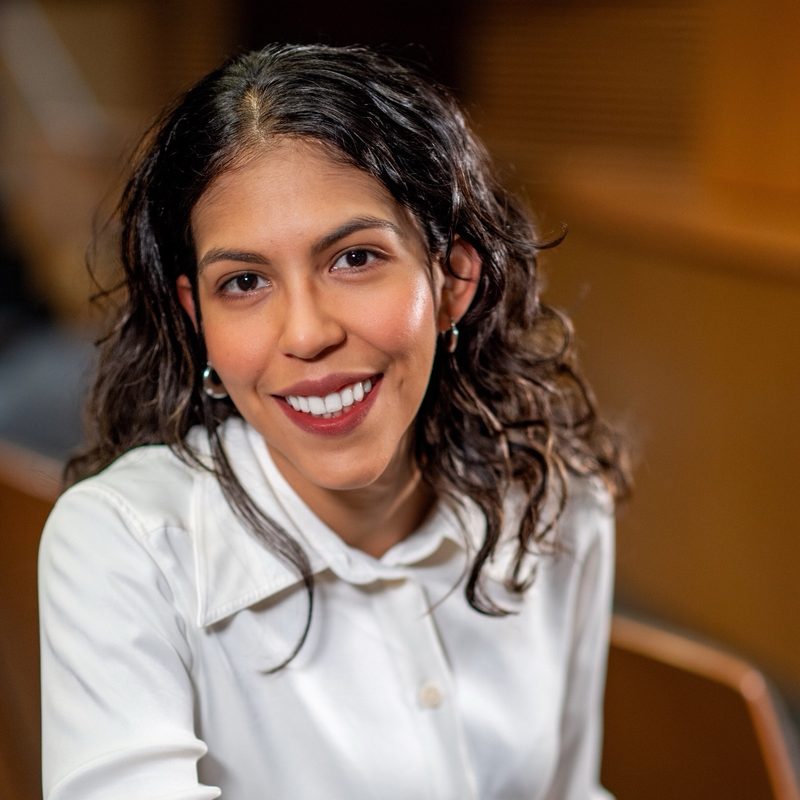
I am a Ph.D. candidate in Economics and Education at Columbia University and a CDEP Research Fellow. My research sits at the intersection of labor economics, health, education, and public policy, focusing on how early experiences shape people’s long-term behaviors, preferences, and beliefs.
My job market paper studies the causal effects of Peru’s mandatory rural health service program on the geographic and sectoral choices of psychology graduates. Using administrative data and a lottery-based design, I find lasting impacts on public sector retention and rural service for participants assigned to less desirable locations. My broader work examines barriers to equitable delivery of health and education programs, and the influence of gender representation in curricula on learning outcomes.
I am on the job market for the 2026–2027 academic year.
mrb2285@tc.columbia.edu
CV
Google Scholar
LinkedIn
Job Market Paper
(with Patrick Agte)
Abstract (click to expand): Can a temporary policy intervention permanently change where people choose to work? We study this question using Peru's mandatory rural service program, which assigns health professionals to posts across the country for one year. We exploit exogenous variation from a lottery system determining psychology graduates' service assignments. Using administrative data and an original survey, we find that psychologists assigned to poorer locations are significantly more likely to subsequently work in the public sector (17%) and poorest districts (54%) up to three years after the program. We then present evidence that the experience changes worker preferences and beliefs. Psychologists assigned to poorer areas score 0.11 standard deviations higher on a prosociality index, and report greater willingness to work serving the poor: both geographically and by type of employer (Ministry of Health facilities). We rule out inertia, differential skill formation, and network effects as alternative explanations. These findings demonstrate the potential of preference endogeneity, not just financial incentives, to attract workers to underserved areas.
Publications
(with Alan Sanchez and Karen Espinoza)
Oxford Development Studies, 2020
Abstract (click to expand): There is limited evidence of the relationship between intimate partner violence (IPV) and child development in developing countries. Alcohol-induced physical IPV (AIPIPV) is one of the main forms of IPV. We use longitudinal data from a cohort of Peruvian children, tracked from the age of 1 year old, to test the association between AIPIPV against the mother during the child's first two years of life, and the child's test scores (vocabulary and math), socio-emotional competencies (self-efficacy and self-esteem, as measured by agency and pride indexes), and delayed school enrolment. Using multivariate regression techniques to estimate the relationship of interest and control for child, household, and community characteristics, we find that early-life exposure to AIPIPV is associated with lower test scores in vocabulary and math, and with lower self-efficacy. No association with self-esteem and with delayed school enrolment is observed.
Read full paper
Work in Progress
Schools Beyond Academics: Gender Equality and Sex Education in School Curricula
(with Alejandra Quintana)
Abstract (click to expand): Governments increasingly use school curricula to promote gender equality, yet these reforms face growing opposition, and evidence on whether national curricula can change gender norms remains scarce. We study Peru’s 2016 National Curriculum, which made gender equality a guiding principle of basic education, introduced comprehensive sexuality education, and reached public schools through new textbooks despite organized resistance from a conservative parents’ movement. We exploit variation in textbook delivery across grades within public schools, and compare public with private schools, which did not receive the textbooks. Preliminary evidence shows that the reform changed what students were taught: in fourth-grade civics textbooks, the gap between references to men and women fell from 85% to 10%, and women became more associated with science and men with family. In public-school grades that received at least half of the reform textbooks, reported cases of sexual violence against girls fell by about two-thirds relative to the pre-reform mean, compared with grades that received fewer textbooks, while physical and psychological violence did not change. School switching did not differ between these grades but increased in public relative to private schools in the reform year, consistent with backlash against the public school system rather than the textbooks themselves.
Redesigning Gateway Science: The Effects of Ohio’s Strong Start in Science Initiative on Student Success
(with Veronica Minaya)
Status: Data collection ongoing
Abstract (click to expand): Introductory biology, chemistry, and anatomy and physiology courses are a major point of attrition for students pursuing STEM and healthcare degrees. Ohio Strong Start in Science (OhioSSS), led by the Ohio Department of Higher Education, supports public colleges as they revisit placement, redesign curricula, and add academic supports, including corequisite models, in these gateway courses. This project evaluates how these redesigns shape students’ success in gateway courses and their subsequent progression toward STEM and healthcare credentials.
Media: Ohio Strong Start in Science Initiative
Policy Work
(with Tatiana Velasco, John Fink, David Jenkins and Tania LaViolet)
Community College Research Center, 2024
Abstract (click to expand): A bachelor's degree is increasingly necessary for securing a job that pays a family-supporting wage, yet while most community college students aspire to transfer and complete a bachelor's degree, too few make it through to this goal. And because community colleges enroll nearly 40% of undergraduates, including many students from low-income backgrounds and historically underrepresented groups with limited access to a bachelor's degree, low levels of bachelor's attainment among community college entrants contribute to disparities in bachelor's attainment by income and race/ethnicity nationally. This report, along with the companion report on four-year institutional outcomes, is designed to be used by college, university, and state-system leaders to set clear goals for eliminating disparities and expanding transfer opportunity for all students who start at a community college with the dream of earning a bachelor's degree.
Read full report
(with Tatiana Velasco, John Fink, and David Jenkins)
Community College Research Center, 2024
Abstract (click to expand): A bachelor's degree is increasingly necessary for securing a job that pays a family-supporting wage, yet while most community college students aspire to transfer and complete a bachelor's degree, too few make it through to this goal. As is clear from the companion report on community college transfer outcomes, some responsibility for this lies with community colleges. But four-year institutions—which tend to have more financial resources to invest in student success—also need to do more to serve students who transfer from community colleges. These students make up a substantial proportion of four-year enrollments and tend to be more diverse in terms of family income, race, and age than students who start college at a four-year institution. Yet, as this report shows, although more than 80% of community college transfer students are retained into their second year, only about half complete a bachelor's degree within four years after transferring, and completion rates are even lower for low-income, Black, Native American, and older students. This report, which provides first-of-its-kind data on four-year institution outcomes for community college transfer students, is designed to be used by university and state-system leaders to set clear goals for eliminating disparities and expanding transfer opportunities for all students who start at a community college with the dream of earning a bachelor's degree.
Read full report
(with Tatiana Velasco, John Fink, and David Jenkins)
Community College Research Center, 2024
Abstract (click to expand): Using National Student Clearinghouse (NSC) data, this report presents national and state-by-state findings on the postsecondary enrollment and completion outcomes of high school students who began taking dual enrollment college courses in fall 2015, tracked up to four years after high school. The authors describe the size and significance of the dual enrollment population for postsecondary institutions and states and compare postsecondary outcomes among dual enrollees to outcomes of other recent high school graduates entering higher education without prior dual enrollment experience. Given previous research indicating that low-income, Black, and Hispanic high school students are severely underrepresented in dual enrollment coursework, the authors further disaggregate results for these subgroups to highlight the potential for dual enrollment to strengthen high-school-to-college-and-career transitions and increase equity for underserved communities.
Read full report
I am always open to exchanging ideas and collaborating on research. If my work resonates with you or if you would like to connect, please feel free to reach out!
Siempre estoy abierta a intercambiar ideas y colaborar en investigaciones. Si te interesa saber más de mi trabajo y deseas ponerte en contacto, no dudes en escribirme!